Career Journeys: The Performing Arts
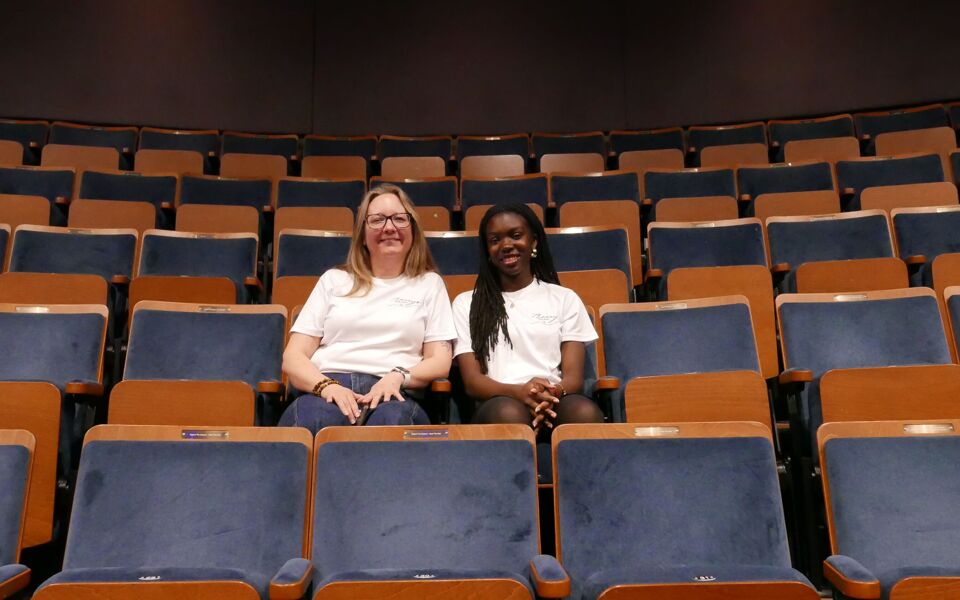
Talent Agent, Tracey Andrews and teen actress, Kayla-Rowe Wilson share their career journeys in an interview with Ms Brown, Head of Drama and LAMDA, below.
Tracey Andrews, founder of Tracey Andrews Talent Management (left) and actress Kayla Rowe-Wilson from Scoop, Netflix (right).
Kayla Rowe-Wilson attends London College of Performing Arts doing a two-year BTEC in Acting.
What do you enjoy about acting?
Kayla (K): I enjoy the versatility of characters and discovering their motives and intentions. I like stepping into a character and seeing their narrative from their personal perspective rather than the objective perspective you get as a viewer. It’s really interesting to explore viewpoints that are different from your own.
Could you describe the audition process you went through to get the role on Scoop for Netflix?
K: Nina Gold Casting asked me to do a self-tape, so I did that.
What was involved?
K: There wasn’t a script. I had to sit on a sofa, grab someone's hand, and look horrified at what I was watching on TV. My aunt helped me set it up in my living room. I sent it to Tracey, and then I was asked to meet the director, Philip Martin. It wasn’t a recall, just a conversation. He asked me a few questions about myself, and a couple of days later I found out through an email from Tracey that I’d been cast.
Tracey (T): I review the self-tape before it’s sent in and give feedback if needed so it can be redone. That’s the advantage of self-tapes - you can keep refining them. The downside is that you’re guessing what the casting team wants, whereas in person you get direction. It’s always good to submit a few variations because sometimes even they don’t know what they’re looking for until they see it.
Do you film it on an iPhone or another camera?
K: I usually use an iPhone.
Could you describe a typical day on set for Scoop?
K: This was one of my first jobs, so it was very exciting. The call time was late morning. They picked us up and drove us to set. Before the shoot, I went to a wardrobe fitting where I tried on different outfits and they chose what I would wear. On set, I went into costume, then to hair and makeup, where they kept my look simple for continuity. They took continuity photos and there was a lot of waiting around because my scene was at night on a bus.
What did you do while waiting?
K: I did some homework! The catering really good!
What happened during the actual shoot?
K: We took continuity photos again, then filmed on a bus going round in circles. I’m not sure where it was - it was dark. We did many takes, with extras being moved around. It was quite tight on the top deck with lots of lighting equipment. On both days we did various takes and then the director would ask to see it in different ways. Then, between takes, hair and makeup would come in and they'd make little changes and little adjustments just to keep the continuity.
What was it like working with Billie Piper?
K: She was really lovely and spoke to us a lot. I didn’t feel uncomfortable at all - everyone was very supportive.
Were you nervous?
K: I was, but I feel like it quickly went away, because I think nervousness and excitement are the same feeling, it just depends on what you choose to feel.
What inspired you to pursue acting?
K: In Year 9, I wrote and performed a monologue based on We Were Liars. When I finished, the class was in tears. It sounds strange, but it felt amazing. I realised I loved making people feel something deeply. That connection - the authenticity actors create - is what inspired me.
What advice would you give to someone wanting a career in acting?
K: Take every opportunity to act, whether in school or extracurricular settings. Going to a performing arts college was a great decision for me because it gave me so many opportunities to improve. The industry is competitive, so auditions and projects are really important. If you love acting, every opportunity to do it matters.
T: You’re always training too - skills like stage combat help you stand out and become more well-rounded.
What are your future ambitions?
K: I’m leaving college and deciding between drama school or taking a year out to focus on auditioning. I’ve had some offers but I’m weighing up whether to continue training or go straight into the industry. If I got a big job, I’d take it - even if that meant leaving drama school.
Tracey, what does being a Talent Agent involve? What’s a typical day?
T: My day starts with reviewing and submitting self-tapes due that day. If a parent uploads with time to spare and requests feedback or direction, I provide that as well, although lead-times are generally very quick! Then I’m checking emails and highlighting any potential new talent. Throughout the day casting breakdowns arrive via the Spotlight platform and email. I filter through my talent to see who is suitable and available, checking requested appearances, playing age, skills and availability - then I submit the most suitable candidates. I deal with audition and self-tape requests. Liaise with parents, local councils and production companies regarding jobs, this can include licensing, travel, contracts, and call-sheets (which as mentioned sometimes don't arrive until very last minute!). I’m often giving guidance on actors’ headshots, showreel material, and their overall profiles. Then there’s the invoicing, chasing payments, and making payments. It’s also about supporting talent and their families - we’re a team. Without them, there’s no agency. It’s not a nine to five job. Call sheets can come late at night for early starts the next day, and I don't rest until I know my actors are fully informed. Even on holiday, I’m working.
What do you love about the work?
T: I used to work in accounts in an office, but this gives me a chance to get out, meet people, and watch shows. It actually started with my daughter. She was an actress when she was younger and did really well when she was small and cute - but then, as she got older, the scripts became longer, the turnaround quicker, she’d come home from school and want to go out with her friends - she didn’t want to be dragged up to London for auditions anymore. So, she stepped away from it. And I really missed it. I really missed it. And along the way, I’d made connections - even as a parent. Someone I knew who ran an agency was going on holiday and asked if I could cover for three weeks. Those three weeks turned into three years. From there, I moved to another agency, and then I set up on my own two years ago. I definitely caught the bug. It’s a rollercoaster - honestly, quite a horrible one at times - because there are more lows than highs. But I still can’t get off it. I absolutely love it.
You have another job?
T: Yes, I’ve been building the agency for two years without taking an income from it. My other job pays the bills while I grow the business.
That’s useful for students to know - many careers in the arts require additional work. What jobs do actors often do alongside acting?
T: Hospitality is common because it’s flexible. Front-of-house theatre work is great too - it keeps you in the industry and helps with networking. Whether you're on the stage or whether you're serving popcorn, you're in that environment and you're networking with people, and it's when you meet people, it's not always about being the best actor. Sometimes they book you because they like you as a person, or you go for a job or a role, and you don't fit that role, but sometimes they'll make a role fit you because they like you.
I would always suggest students do all their exams get other skills to fall back on. It's finding careers that are flexible, or that you can do on the laptop potentially if you're hanging around on set.
K: My chaperone on a recent international commercial job had a hybrid, flexible job, like accounting, that she was doing as we travelled.
T: A lot of young adult actors do chaperone on sets as well, so the older actors will chaperone the younger children, so they're getting paid to chaperone but they're also using that to network
So, personality matters.
T: Absolutely. I think the parents can sometimes forget that. When they go into an audition with a child, the team is not always auditioning the child, they're auditioning the parent. The child could be great, but the parent might not be so good. So, there's eyes and ears on everything. So, it's very, very important to be friendly to everybody.
What advice would give to a student wanting to work in casting?
T: it is about who you know and networking with people. Doing an apprenticeship or work experience at a casting studio or an agency would be a good start.